

EPEAT® Criteria
Credible by Design
EPEAT 2.0 Criteria
EPEAT 2.0 criteria are the result of an intensive effort to advance sustainability across the life cycle of electronic products and represent a significant step forward in aligning the operations, supply chains and products of the global electronics sector with leading sustainability and ethical sourcing practices.
The criteria cement EPEAT as the definitive global electronics ecolabel, helping thousands of purchasers around the world reduce costs while purchasing products that are better for both people and the planet.
EPEAT 2.0 criteria currently apply to the following product categories: Computers & Displays, Imaging Equipment, Mobile Phones, Servers, and Televisions. See the definitions of product types included in EPEAT 2.0. Additional product categories may be transitioned to EPEAT 2.0 criteria later.
EPEAT 2.0 criteria quick links:
- Climate Change Mitigation Criteria
- Sustainable Use of Resources (Circularity) Criteria
- Chemicals of Concern Criteria
- Responsible Supply Chains Criteria
- Imaging Equipment Consumables Criteria
To increase accessibility, transparency and consistency in EPEAT implementation, our Supplier Engagement Program for EPEAT (SEP), has made the EPEAT 2.0 criteria available in Traditional Chinese. We will continue to respond to translation requests, so please reach out to sep@gec.org for suggestions on what we should prioritize next.
- 氣候變遷減緩標準
- 資源永續利用標準 Please note that EPEAT-SUR-2026 is currently undergoing translation.
- 減少關注化學品標準
- 負責任供應鏈準則
EPEAT also has criteria for solar panels and inverters.

Climate Change Mitigation
These criteria require electronics brands to design and manufacture products with climate change mitigation in mind, including but not limited to:
- Measure GHG emissions and publicly disclose product carbon footprints or life cycle assessments that have been reviewed by a third-party expert
- Establish and publicly report progress on meeting science-based GHG emission reduction targets across manufacturer and supply chain operations
- Implement best practices for decarbonization, including manufacturing energy efficiency, renewable electricity sourcing, product energy efficiency, and reducing high global warming potential chemicals in manufacturing
Sustainable Use of Resources (Circularity)
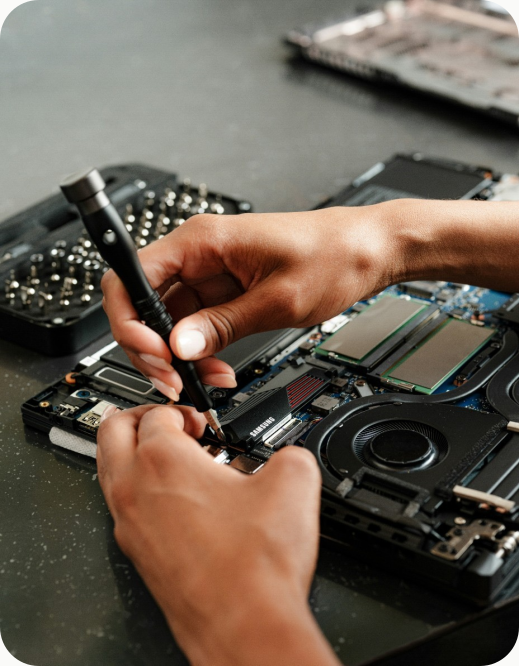
Products that meet these criteria are designed to conserve material resources and enable circular systems, including but not limited to:
- Increase use of reused and recycled content
- Design for durability, repair and reuse, availability of replacement components and repair services, use of long-life rechargeable batteries, prohibition of use of software parts pairing as a barrier to repair, and access to system firmware
- Responsibly manage once products ultimately reach end-of-life
- Package in recycled, rapidly renewable or certified forest management / chain of custody packaging
- Implement water stewardship
Chemicals of Concern
Products that meet these criteria are designed to reduce life cycle impacts related to chemicals of concern in the product, those that workers are exposed to during manufacturing, and those used in packaging, including but not limited to:
- Increase knowledge & publicly disclose chemical substances found in products
- Restrict use of known hazardous substances such as PFAS (forever chemicals), lead, cadmium, beryllium, halogenated flame retardants and phthalates in products
- Identify safer substances using hazard assessment to avoid the introduction of regrettable substitutes
- Reduce use of high priority process chemicals in manufacturing operations to protect workers
- Reduce toxicity of packaging including PFAS, heavy metals, chlorinated compounds and phthalates
Responsible Supply Chains
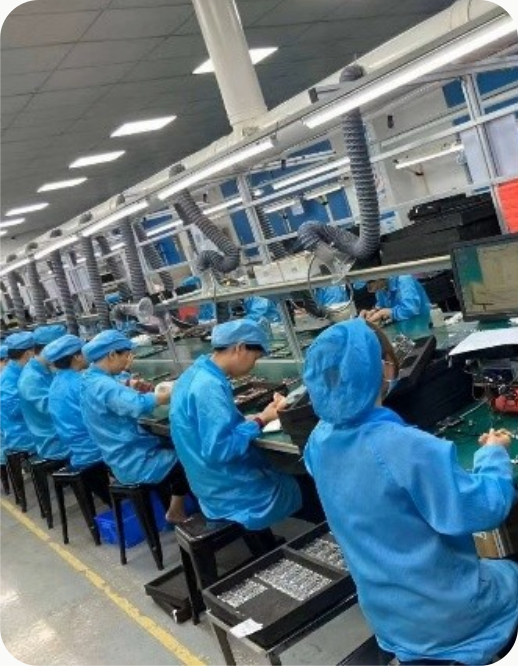
Products that meet these criteria are designed to mitigate labor and occupational health and safety (OHS) concerns in the electronics supply chain, including but not limited to:
- Mitigate labor and OHS risks through supply chain risk assessment and audits of manufacturer and supplier facilities
- Conduct living wage assessments and directly engage workers to improve workplace conditions and publicly report on activities undertaken
- Enable safer and more sustainable labor and workforce practices
- Promote and demonstrate responsible mineral sourcing
Imaging Equipment Consumables
These criteria only apply to consumables (such as toner cartridges and copy paper) used in imaging equipment products. Products that meet these criteria are designed to:
- Conserve material resources
- Reduce GHG emissions by allowing for the use of recycled content paper and remanufactured cartridges
- Protect human health by addressing indoor air quality
- Enable circularity through take-back of ink and toner cartridges
EPEAT Criteria for Solar Products
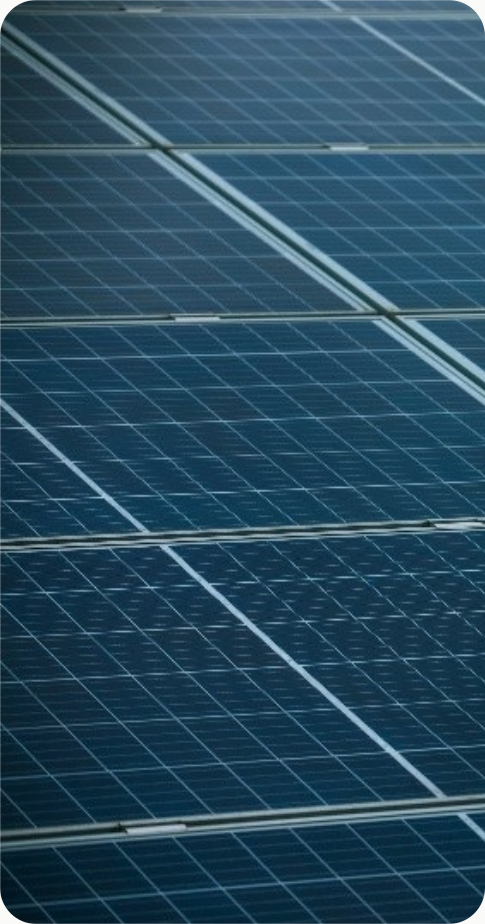
EPEAT criteria for solar products address multiple attributes and performance categories across the product life cycle, including but not limited to embodied carbon, management of substances, preferable materials use, life cycle assessments, energy efficiency and water use, responsible end-of-life management, design for recycling, product packaging, and corporate responsibility.
EPEAT Photovoltaic Modules and Inverters Category Criteria: NSF/ANSI 457-2019 (r2024) Sustainability Leadership Standard for Photovoltaic Modules and Photovoltaic Inverters and EPEAT-ULCS-2023 Criteria for the Assessment of Ultra-Low Carbon Solar Modules. Photovoltaic modules must meet the criteria in both documents, and photovoltaic inverters must meet the criteria only in NSF/ANSI 457-2019.
The standard EPEAT verification process requirements apply to all product categories, but verification for photovoltaic modules is more nuanced due to the requirements for embodied carbon thresholds – see EPEAT Solar Category Verification Overview and GEC List of Designated Experts for Ultra-Low Carbon Solar Module Criteria for further details.
EPEAT 1.0 Criteria for ICT Products
EPEAT 2.0 criteria currently apply to the following product categories: Computers & Displays, Imaging Equipment, Mobile Phones, Servers, and Televisions. Additional product categories may be transitioned to EPEAT 2.0 criteria later.
For the applicable product categories identified above, the EPEAT Registry clearly identifies whether a product meets EPEAT 1.0 or EPEAT 2.0, recognizing that some products may meet both sets of criteria during the transition. For these categories, products that meet EPEAT 1.0 will continue to appear in the Registry until July 1, 2027.
EPEAT 1.0 Computers and Displays Category Criteria: IEEE 1680.1™ - 2018 Standard for Environmental and Social Responsibility Assessment of Computers and Displays and IEEE 1680.1a™ - 2020 Standard for Environmental and Social Responsibility Assessment of Computers and Displays - Amendment 1: Editorial and Technical Corrections and Clarifications
EPEAT 1.0 Imaging Equipment Category Criteria: IEEE 1680.2™ - 2024 Standard for Environmental Assessment of Imaging Equipment
EPEAT 1.0 Mobile Phone Category Criteria: UL 110 Edition 2 – 2017 Standard for Sustainability for Mobile Phones (including revisions through September 28, 2018)
EPEAT 1.0 Network Equipment Category Criteria: Criteria for the Sustainability Assessment of Network Equipment for the Global Electronics Council EPEAT® Ecolabel and the TÜV Rheinland Green Product Mark
EPEAT 1.0 Servers Category Criteria: NSF/ANSI 426-2019 (r2024) Environmental Leadership and Corporate Social Responsibility Assessment of Servers
EPEAT 1.0 Televisions Category Criteria: IEEE 1680.3™ - 2024 Standard for Environmental Assessment of Televisions
Share Your Ideas
EPEAT welcomes proposals for new criteria or product categories, revisions to existing criteria and/or corrections to existing criteria from stakeholders. To submit a proposal, please complete all sections of the GEC Criteria Feedback and Request Form and send, with any attachments, to Criteria@GEC.org. Questions about completing this form can also be directed to Criteria@GEC.org.
